MULVANEY, Thomas
(Service number 72038)
| First Rank | Rifleman | Last Rank | Rifleman |
|---|
Birth
| Date | 05/05/1897 | Place of Birth | Wellington, New Zealand |
|---|
Enlistment Information
| Date | 7 November 1917 | Age | 20 |
|---|---|---|---|
| Address at Enlistment | Church Street West, Timaru | ||
| Occupation | Farm Labourer | ||
| Previous Military Experience | |||
| Marital Status | Single | ||
| Next of Kin | Mrs Nellie Kelly (sister) Church Street West Timaru | ||
Military Service
| Served with | NZ Armed Forces | Served in | Army |
|---|
Embarkation Information
| Body on Embarkation | 37th Reinforcements | ||
|---|---|---|---|
| Unit, Squadron, or Ship | A Coy, 3 Battalion 3 NZ Rifle Brigade | ||
| Date | 9 May 1918 | ||
| Transport | HMNZT 103 Maunganui | ||
| Embarked From | Wellington, New Zealand | Destination | Liverpool, Merseyside, England |
| Other Units Served With | |||
|---|---|---|---|
| Last Unit Served With | A Coy, 3 Battalion 3 NZ Rifle Brigade | ||
Military Awards
| Campaigns | Western European | ||
|---|---|---|---|
| Service Medals | British War Medal, Victory Medal | ||
Award Circumstances and Date
No information
Prisoner of War Information
| Date of Capture | |
|---|---|
| Where Captured and by Whom | |
| Actions Prior to Capture | |
| PoW Serial Number | |
| PoW Camps | |
| Days Interned | |
| Liberation Date |
Death
| Date | 4 November 1918 | Age | 21 |
|---|---|---|---|
| Place of Death | Le Quesnoy, France | ||
| Cause | Killed in action | ||
| Memorial or Cemetery | Cross Roads Cemetery, Fontaine-au-Bois, Nord France | ||
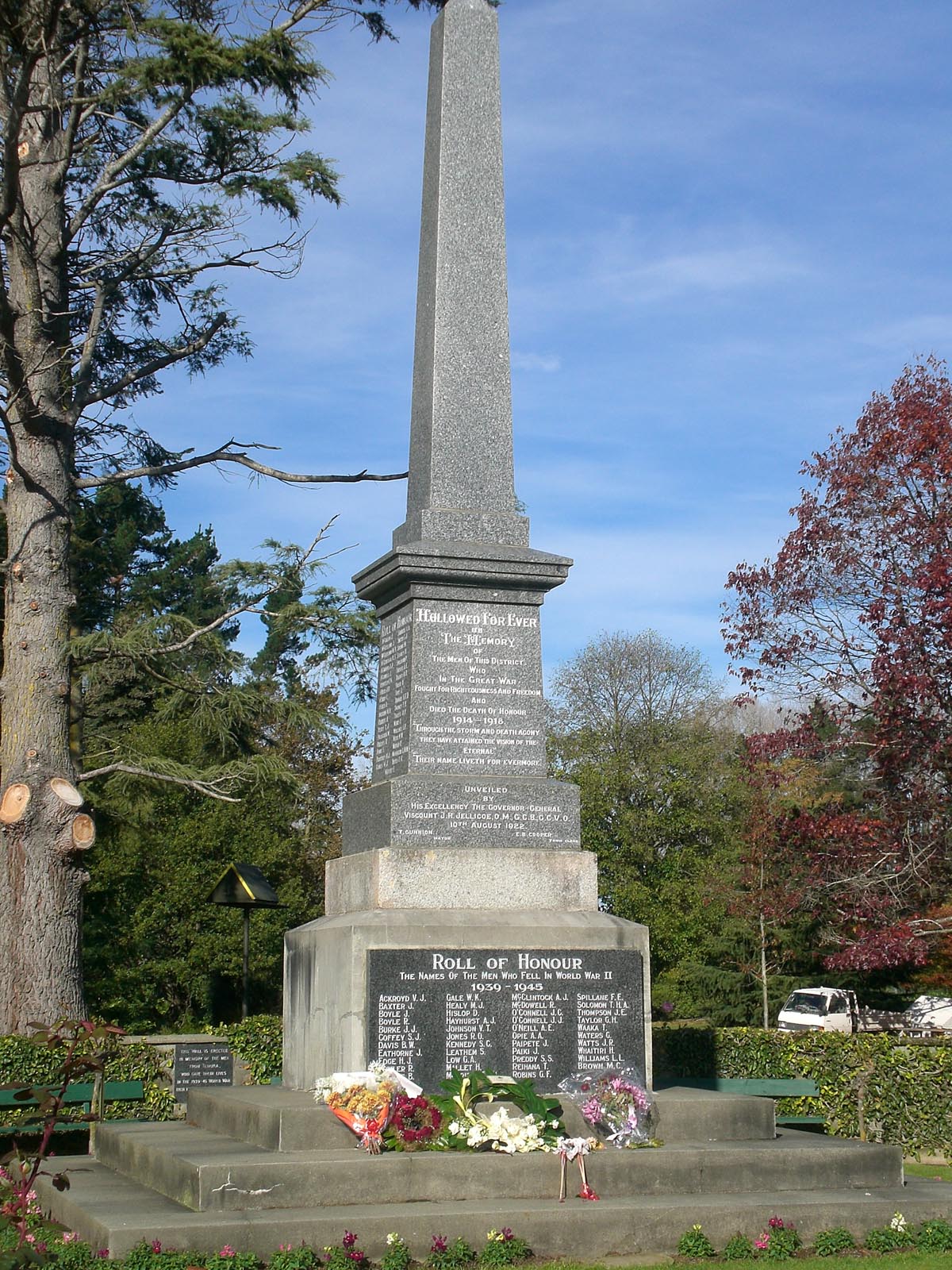
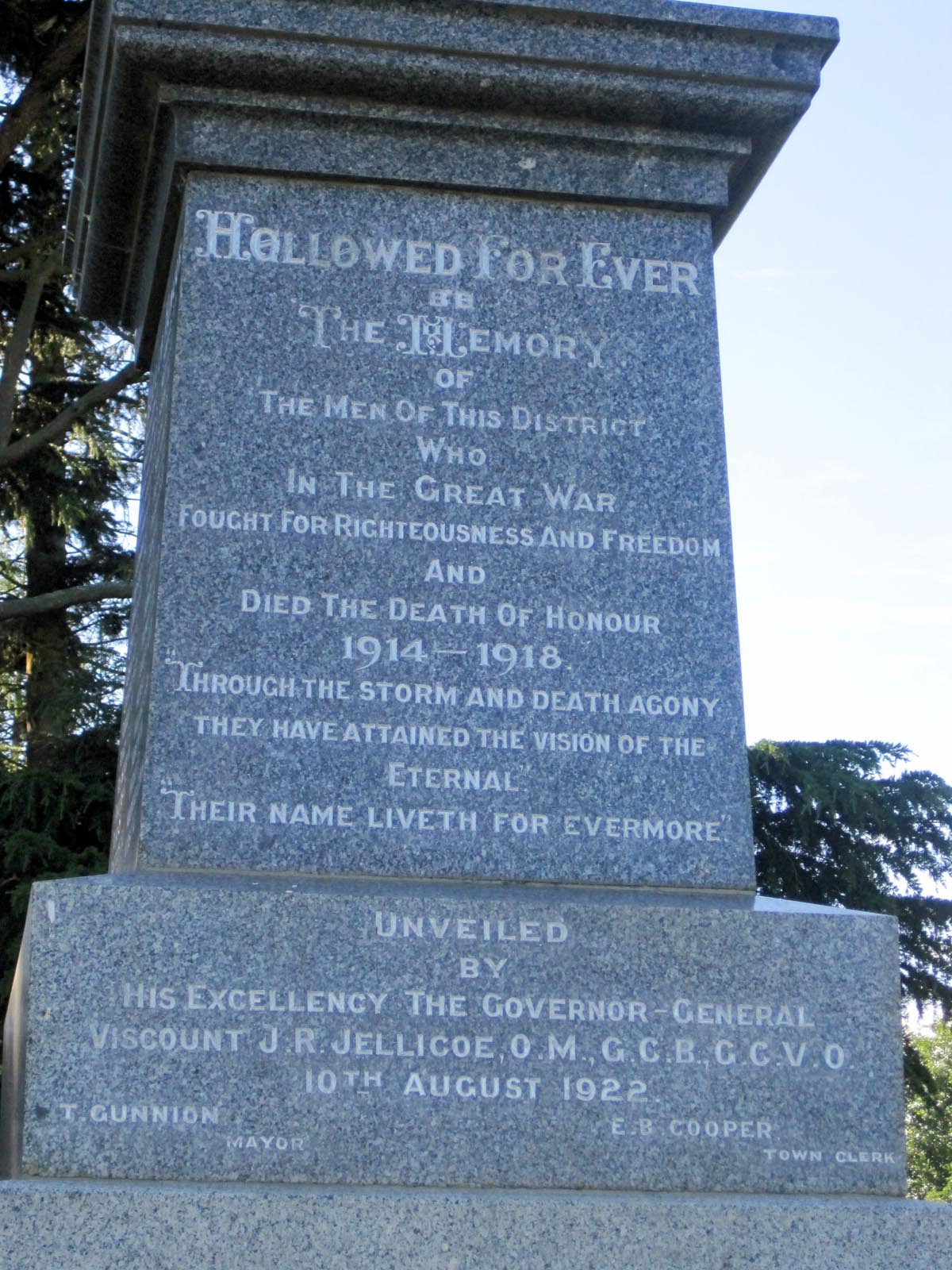
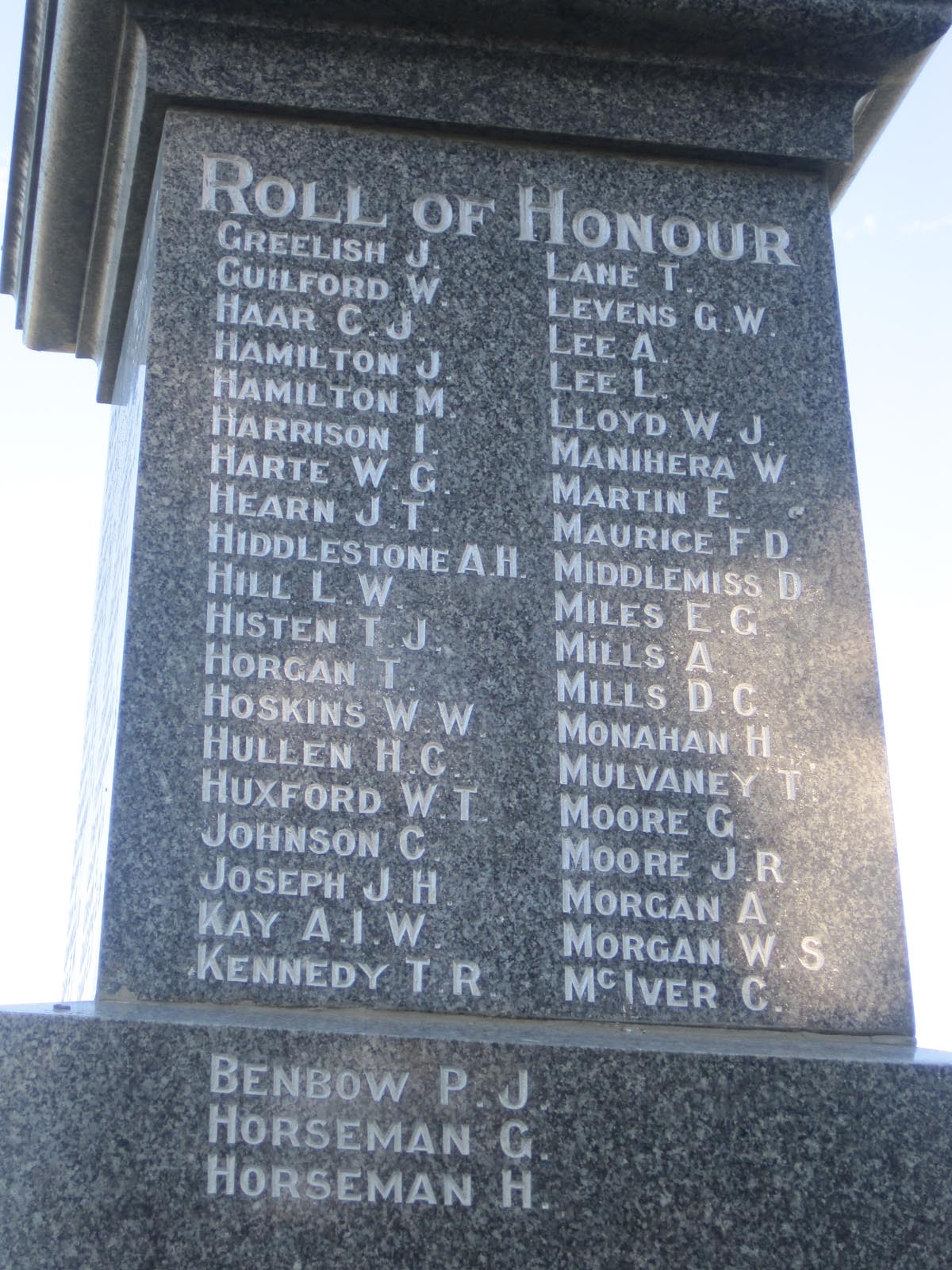
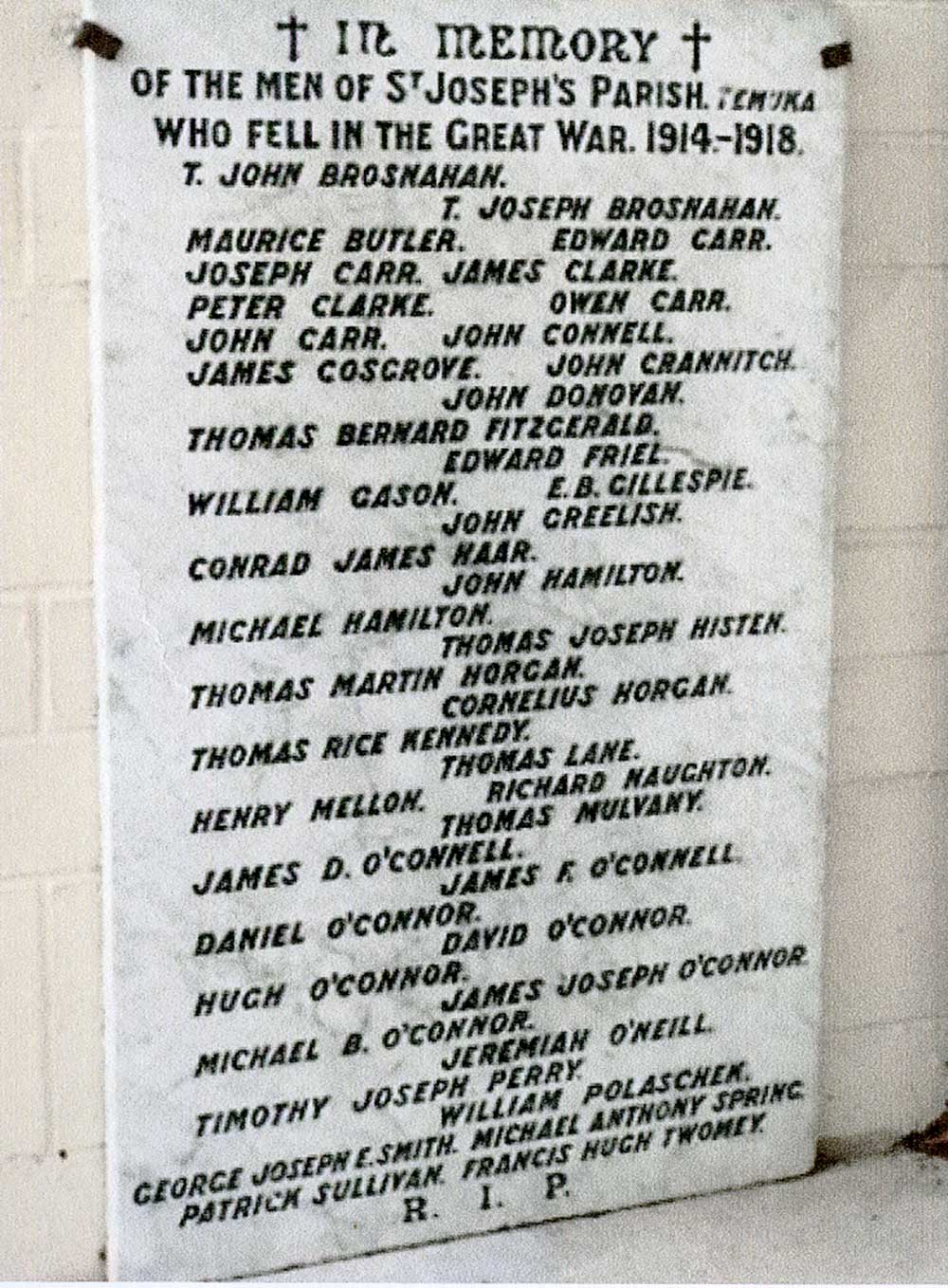
| New Zealand Memorials | Timaru Memorial Wall; Temuka RSA Roll of Honour; Temuka War Memorial | ||
Biographical Notes
Thomas was the youngest son of Joseph and Mary Mulvaney, born at Wellington on 5 May 1897. His father Joseph, born at Navan, Meath, Ireland was listed as a labourer of Waimate, when he married Mary on 14 September 1881 at St Patrick’s Church. Mary, born at Kilmacabea, Cork, Ireland in 1859, was listed as the daughter of Ms Dempsey. Joseph and Mary later moved to Wellington where he was employed as a carter. He died there on 13 October 1899. Mary remarried in 1900 to Jeremiah O’Donoghue a local (Waimate) chaff cutter.
As a child the family moved around a bit, and Thomas received his education at the Hook, Waimate, and Temuka schools. When he left school he took up employment as a farm labourer and, when he enlisted and medically boarded at Invercargill on 7 November 1917, he was working for the Watt Brothers at Wedonside, Southland. He had received his Government call-up for the 1st Division Reservists on 2 October 1917, and at that time had been working as a farm labourer at Gleniti (i.e. before moving to Invercargill). His enlistment papers describe him as being aged 20 years, single, Roman Catholic, 5 foot 8 ¾ inches tall, weighing 142 ½ pounds (65kgs), chest measuring 35-37 ¼ inches, dark complexion, blue eyes and brown hair. He nominated his sister Mrs Nellie Kelly of Church Street West as his next of kin.
On entering Trentham Camp Thomas was posted to the 38th Reinforcements 3 New Zealand Rifle Brigade. After completing his enlistment procedures he was issued basic equipment before being transferred to Featherston Camp where he was to undertake his basic infantry training. During this time he was transferred to the 37th Reinforcements. Basic training completed the men joined the infamous three-day route march from Featherston Camp to Trentham Camp via the Rimutaka Hill Road. At Trentham final more in-depth training was completed before they were considered ready for overseas deployment. At Wellington on 9 May 1918 he boarded HMNZT103 “Maunganui” (her eleventh and last as a troop transport) for the voyage to Liverpool, Merseyside, England. Also on board was the 29th Reinforcements NZ Pioneer (Maori) Battalion, making up a total of 970 troops. The ship had a brief stop at Freemantle before rendezvousing with their convoy escort off the coast of West Africa and arriving at Liverpool on 24 June. Life aboard was reasonably relaxed but with relatively strict routine of fitness, sports, and keeping their equipment in clean and good working order. On arrival in England the reinforcements were posted to the Reserve Battalion at Brocton in preparation for another six weeks of training before proceeding to France. Brocton was a bleak and dreary camp surrounded by pleasant countryside dotted with quaint old-time villages. Here the men received further training including gas, trench construction and fighting skills.
On 21 September 1918, Rifleman Mulvaney was posted to France where he entered the detested camp at Etaples, but only remained there for 4 days before joining the 3rd Battalion 3 New Zealand Rifle Brigade (NZRB) in the field. By this stage of the war the NZ Division was involved in the 100 Day Offensive pushing the Germans back towards the Belgium–German border. Over the next few weeks the battalions would advance through trench lines and pulverised villages, towards the French town of Le Quesnoy where the German resistance was known to be stiff. The final battle in which the New Zealanders were involved was the Battle of Sambre (1 to 11 November). The ‘assault by stealth’ on the town of Le Quesnoy would be the NZ Division’s last successful major battle action of the war. Their task of was to envelop the town of Le Quesnoy and carry the line forward a total distance of five and a half miles on a frontage of 3,000 yards. The capture and mopping-up of the town was allotted to the New Zealand Rifle Brigade. It was during this attack on 4 November that Rifleman Mulvaney was reported wounded in action. At a court of enquiry in the field on 15 December 1918 he was confirmed as killed in action on that date. His body had been buried at the Cross Roads Cemetery, Fontaine-au-Bois, Nord France.
After the war his mother Mary was forwarded his war medals, including the British War Medal and Victory Medal along with a scroll and plaque. Thomas’s name is commemorated on the Timaru Memorial Wall, Temuka War Memorial and Temuka RSA Roll of Honour.
Two of Thomas’ brothers who also served in Egypt and France with the 3rd Battalion 3 NZ Rifle Brigade: 25/1182 Rifleman Joseph Mulvaney (1888-1941) and 26/1195 Lance Corporal John Mulvaney (1895-1967).
Sources
"Last call on First Division : No.10 (South Canterbruy Recruiting District" in Timaru Herald 2 October 1917 p5, "Personal items" in Timaru Herald 15 January 1919 p7; "Roll of honour : fallen New Zealanders" in New Zealand Times 15 January 1919 p3, and "In memoriam" in Timaru Herald 4 November 1919 p6, courtesy of Papers Past at https://paperspast.natlib.govt.nz/; "Rifleman Thomas Mulvaney", A Street Near You, at https://astreetnearyou.org/person/296409/-; New Zealand War Graves Project at https://www.nzwargraves.org.nz/casualties/thomas-mulvaney; New Zealand ANZACs in the Great War 1914-1918 (University of New South Wales) at https://nzef.adfa.edu.au/showPerson?pid=184938
External Links
Related Documents
No documents available.
Researched and Written by
Currently Assigned to
Not assigned.
 Licensed under a Creative Commons Attribution-NonCommercial 4.0 International License unless otherwise stated.
Tell us more
Do you have information that could be added to this story? Or related images that you are happy to share? Submit them here!