GORMAN, Mary
(Service number 22/73)
| First Rank | Nurse | Last Rank | Staff Nurse |
|---|
Birth
| Date | 10 May 1880 | Place of Birth | Oamaru |
|---|
Enlistment Information
| Date | 19 May 1915 | Age | 35 years |
|---|---|---|---|
| Address at Enlistment | Canterbury | ||
| Occupation | Nurse - Sister Wellington Hospital | ||
| Previous Military Experience | |||
| Marital Status | Single | ||
| Next of Kin | J. GORMAN (father), Waimate, Canterbury | ||
Military Service
| Served with | NZ Armed Forces | Served in | Army |
|---|
Embarkation Information
| Body on Embarkation | New Zealand Expeditionary Force | ||
|---|---|---|---|
| Unit, Squadron, or Ship | New Zealand Army Nursing Service | ||
| Date | 21 May 1915 | ||
| Transport | Marama | ||
| Embarked From | Wellington; transferred to Moldavia at Sydney | Destination | Sydney, Australia; then Suez, Egypt |
| Other Units Served With | |||
|---|---|---|---|
| Last Unit Served With | New Zealand Army Nursing Service | ||
Military Awards
| Campaigns | |||
|---|---|---|---|
| Service Medals | 1914-15 Star; British War Medal; Victory Medal | ||
Award Circumstances and Date
No information
Prisoner of War Information
| Date of Capture | |
|---|---|
| Where Captured and by Whom | |
| Actions Prior to Capture | |
| PoW Serial Number | |
| PoW Camps | |
| Days Interned | |
| Liberation Date |
Death
| Date | 23 October 1915 | Age | 35 years |
|---|---|---|---|
| Place of Death | Lost at sea, HT Marquette, Aegean Sea | ||
| Cause | Drowned | ||
| Memorial or Cemetery | Mikra Memorial, Greece. Waimate Old Cemetery (parents' headstone) | ||
| New Zealand Memorials | Mikra Memorial, Greece; parents’ headstone in Waimate Old Cemetery; Timaru Memorial Wall; Waimate War Memorial (Nurse Gorman); Memorial plaque at Waimate Hospital (now with Waimate Museum); Nurses Memorial Chapel, Christchurch (‘Marquette’); St Patrick’s Church (Waimate) Memorial list (June 2015); Arno Hall Roll of Honour (Sister Gorman); Elizabeth Garrett Anderson Hospital, London overseas nurses memorial; “Five Sisters” window in York Minster, England - national memorial to women of the Empire | ||
Biographical Notes
Mary Gorman was born on 10 May 1880 at Oamaru, the third daughter of Irish-born John and Catherine (Kate, née Sullivan) Gorman, of Arno, Kapua, near Waimate, and the first of their children born in New Zealand. John and Kate who had married in County Limerick, Ireland, came to New Zealand in about 1879 with two daughters, Bridget and Johanna (Annie). Bridget was born on 27 March 1877 and baptized at Pallasgreen and Templebredin, County Limerick on 29 March 1877. Annie was probably born in 1878. Two more daughters and five sons followed, Mary and the next three (Margaret, Michael and Patrick) registered at Oamaru, then Catherine and John registered at Christchurch, and finally Andrew and Leo registered at Rakaia. The four youngest were all baptized at the Cathedral. There is no baptism record for the four eldest in the Christchurch diocese. Mary was indeed born in May 1880, at Oamaru, although, on enlistment, her birthplace was unknown. Family trees and newspaper reports record her as born at Waimate, where she lived for many of her formative years, where she was to train as a nurse, and where she would be so warmly remembered after her death. Mary was likely baptized Mary Veronica Gorman, which name she used regularly on electoral rolls (1902 – 1914) and was occasionally mentioned as Mary V. Gorman. John (senior) who worked for the railways as a platelayer and ganger, was stationed in Mid-Canterbury in the 1890s. He also had land at Oamaru, which he had held from soon after his arrival in New Zealand. After the turn of the century, John and Kate moved to the Waimate district, where they were at Studholme Junction for about ten years, then at Arno or Kapua. In late March 1899 Kate Gorman, of Lauriston (where the family was living), was successful in the land ballot for sections of Waikakahi Estate. All their children came with them. In 1889, the three oldest – Bridget, Annie and Mary – had featured in the Christchurch Catholic Parochial Girls’ School prize-list, Mary being rewarded for regular attendance. Annie also had mention at the school in 1888. In 1903 Mary’s brothers John and Andrew were pupils at St Patrick’s School, Waimate, where Mary may have also had some education. Annie Gorman who had started as a pupil teacher at Lauriston in 1893, was recommended for the position of fourth assistant at the Temuka District High School in 1907 and duly appointed. Later, she took up a position in the North Island and was at Hastings when Mary drowned (1915). In early March 1909, John Gorman (ganger) gave evidence in court in a case of trespass on the railway at Hook. Master Leo. Gorman, the youngest son of Mr Gorman, of Waikakahi, having been appointed cadet on the railway at Christchurch, left at the beginning of April 1913 for his new position. Later in the month, the charge against him for breaches of the Defence Act (failure to register and failure to attend parades) was withdrawn. Michael Gorman was serving on the Kapua School Committee in 1913. Catherine Gorman followed her sister Mary into nursing, passing the examination in invalid cookery (first class) at Christchurch in August 1915 and successful in the State examination for Registration of Nurses in late 1916.
Among the members of Dr Cruickshank’s class in “first aid”, also held at Nukuroa, Studholme, who passed the examination in November 1907, was Miss Mary V. Gorman. Mary was doing all she could to pursue her desire to train as a nurse. At the August 1909 meeting of the Trustees of Waimate Hospital, three applications for the positioner of probationer nurse were considered, Miss Mary Gorman, Studholme, being appointed. “. . . . . . the young lady was a local girl and this was an advantage. She was likely to stay in the district, her people being here.” Mary trained at the Waimate Hospital, passing the examination for the State registration of nurses in mid-1912. At the August 1912 meeting of the Waimate Hospital Committee, the chairman stated that Nurse Gorman, “who has gained her certificate on completion of her three years’ term of office, is now leaving, and I think we should place on record our appreciation of her services, which, including taking charge at certain times, have always been faithfully carried out.” At the October 1912 meeting of the Waimate Hospital Committee of Management, a letter of appreciation from Miss Mary Gorman, a former nurse in the institution, was read. She thanked both the management and the medical superintendent for their kindness and consideration. When Mary nursed at the Waimate Hospital she was a well-known figure biking from Waimate to Waihao Forks on her days off. By September 1912 she had been appointed a staff nurse in the Wellington Public Hospital, where she would be a sister for the next three years, having been promoted to charge nurse in February 1913.
All changed quite quickly when Mary Gorman, a nursing sister at Wellington Hospital, enlisted at Wellington on 19 May 1915. Medically examined that day, she stood at 5 feet 2 inches and weighed 140 pounds, with a dark complexion, blue eyes and dark brown hair. Her sight, hearing, colour vision, heart and lungs were all normal, her teeth good. She had never been ill, had never had a fit, was free from inveterate or contagious skin disease, was vaccinated, and was in good bodily and mental health. Single and Roman Catholic, she named her father as next-of-kin – J. Gorman, Waimate, Canterbury. “Nurses are coming into Wellington from all parts of the Dominion – the lucky ones who have been selected to leave first. . . . . ,” reported the Evening Post of 20 May 1915. Sister Gorman (of Waimate), of Wellington Hospital, was one of the nurses selected for service in Malta and Egypt, and would leave Wellington on 22 May, via Sydney, having joined the New Zealand Army Nursing Service Corps. On 20 May 1915, the Medical Superintendent of the Wellington Hospital drew attention to the serious threats made upon the Hospital medical and nursing staff by the war. He was referring to resignations of surgeons and some nurses. Nurse Gorman was granted extended leave of absence to proceed abroad with the Stationary Hospital staff. Come 21 May 1915 at Wellington and Nurse Mary Gorman, of Waimate, along with Nurse Florence Gill, was a passenger on board the “Marama” bound for Sydney. There she transferred to the “Moldavia” for Suez. Mary and Florence were members of the first contingent of New Zealand nurses raised by the Government for service in Malta and in Egypt. Before leaving, the 31 nurses were given a farewell at Bellamy’s, the guests of the Minister for Defence at afternoon tea. “The nurses, some of whom were matronly and some quite young, had a wonderful air of sang froid, as if their preparations had been long in contemplation.” The little badges which “the ladies of the lamp” carry as the insignia of their calling, were pinned on their uniforms, and boxes of chocolate (provided by the Lady Liverpool Fund) were handed to them. They were bid goodbye, for the time being, a very pleasant voyage, and a safe return.
Mary embarked on 21 May 1915 by the “Marama”. On leaving, though a petite woman, she was in good health and was inoculated for typhoid and again vaccinated. No matter how well individually prepared, nothing could guard against the terrible tragedy which awaited Mary and compatriot nurses. She was one of the ten New Zealand nurses who died when the Marquette was torpedoed and sank on 23 October 1915 south of Salonika Bay in the Aegean Sea. The Marquette had taken on board officers and men of the NZ Medical Corps, 36 NZ Army Nursing Staff, 610 officers and men of 29th Divisional Ammunition Column at Alexandria on 19 October. Mary and other nurses had been working at No. 1 New Zealand Stationary Hospital at Port Said when they were ordered to prepare to go to Lemnos where the hospital was to be set up to care for casualties from the Dardanelles. The Marquette was hit by a torpedo on the starboard side and within 15 minutes she sank. Most of the nurses lost with the Marquette were from the South Island. It is believed that the hospital was being transported to Anzac Cove when the transport was torpedoed. The Marquette was an easy target as it was not marked as a hospital ship with a red cross.
Mary was a strong swimmer who jumped into the sea to save her non-swimmer friend, Catherine Fox; both were not seen again. “Staff Nurse Catherine Fox was flung into the sea, and Acting-Matron Cameron was severely injured, and would never fully recover from her injuries. As a strong swimmer, Staff Nurse Mary Gorman saw what was happening and, knowing that her friend Catherine could not swim, jumped into the water to save. Both would never be seen again.” ("The Baker Boys" - by Clinton Mhic Aonghais). (A conflicting report of Mary’s fate exists though. It may have been that her legs were crushed by a lifeboat, and believing herself injured beyond hope, gave away her lifebelt to aid another.) Nurse Mary Gorman was on 2 November reported missing believed drowned, understandably, then on 9 November she was reported drowned.
“The news of the loss of ten nurses by the torpedoing of the hospital transport Marquette, in the Aegean Sea, while removing No. 1 New Zealand stationary hospital staffs from Port Said to a new base — and particularly the fact of so many well-known and highly-esteemed Waimate nurses being in the list — has cast quite a gloom over the town to-day. The flags are flying half-mast out of respect for the memory of the martyred nurses. No fewer than five out of the ten missing nurses were well-known in Waimate. Nurse M. Gorman, of Kapua, was trained in the Waimate Hospital, and left here to join the Wellington Hospital staff three or four years ago, and became a sister there, being very well thought of.” [Waimate Daily Advertiser, 3 November 1915.] Dr Margaret Cruickshank, of the Waimate Hospital noted that Miss Gorman’s “people are old residents of this district, residing at Kapua. As a probationer Nurse Gorman was a favourite with patients and staff alike and I know Dr. Barclay considered her one of the best nurses that Waimate Hospital had sent out, and I know she was appreciated very much in Wellington Hospital, where she had been a Sister for the last three or four years. Nurse Gorman volunteered early, and when she was accepted one knew that any of our “boys” falling into her hands would be well taken care of, while her genial and happy manner would go far in making a cheerful spot all around her.” At the meeting of the Waimate Hospital Committee, a vote of condolence was passed and sent to the relatives of four nurses (Nurses Gorman, Clark, Brown and Fox) — noble women engaged in Red Cross work at the front — who, they feared, had lost their lives by the torpedoing of a troopship.
Wellington Hospital Committee expressed appreciation of the services of the late Sister Mary Gorman (who lost her life in the Marquette disaster) and passed a resolution of sympathy in November 1915.
Perhaps the most reliable immediate account of the disaster was the statement of Major Wyllie, NZMC, included in the official account forwarded to headquarters and printed in Kai Tiaki, 1 January 1916. “At 9.15 a.m. on Saturday, October 23, the H.T. Marquette was torpedoed by a submarine. The torpedo struck the vessel on the starboard side, well forward, and the vessel almost at once dipped at the bow and developed a marked list to port, which increased very much as time went on, finally, after lying so much to port as to be almost on her side, the vessel righted herself and gradually sank, bow first, the time occupied being from seven to fifteen minutes, according to different observers. Immediately the accident happened all proceeded to their individual stations, and put on the lifebelt which was there waiting. I had charge of the New Zealand Stationary Hospital men, who . . . . . . . As regards the nurses they assembled at their stations in charge of Lieutenant-colonel M’Gavin and three officers, and were seen into boats. Owing, however, to the unfortunate bungling of the lowering of these boats a series of catastrophes occurred on each side of the vessel. On the port side one boat descended heavily on top of one already in the water, and thereby so seriously injured several of the nurses as to kill them outright, or so seriously injure them as to make their subsequent existence in the water impossible. On the starboard side, one boat, after being filled with nurses, assumed a perpendicular position, and emptied many of them into the water. Only one boat with nurses left the vessel, and that boat was in a waterlogged submerged state. Most of the rescued nurses spent all their time in the water on rafts, or clinging to bits of wreckage. At no time did I see any signs of panic or any signs of fear on the part of anyone, and I cannot find words adequately to express my appreciation of the magnificent way in which the nurses behaved, not only on the vessel but afterwards in the water. Their behaviour had to be seen to be believed possible. Lieutenant-colonel M’Gavin was one of the last to leave the vessel, . . . . . . .”
When a welcome home social to returned soldiers of the district (Studholme, Nukuroa and Willowbridge) was held in the Hannaton Hall on 3 November 1915, the chairman made touching reference to the gloom cast over the district that day on receipt of the news of the loss of a vessel, with ten nurses supposed to be drowned, three of them being former residents of the district (Nurses Fox, Hume and Gorman) and Nurse Brown of Dr Barclay’s private hospital, being a frequent visitor to the district. At a meeting of the Waimate Red Cross Society on 3 November 1915, Dr. Cruickshank moved the following motion of condolence which was passed, all the members standing: — “That the Secretary be instructed to writes to the relatives of the nurses well-known in this district lost in the sinking of the Marquette — Nurses Hildyard, Gorman, Fox, Brown and Clark conveying the heartfelt sympathy of the Waimate Red Cross Society in the loss they have sustained and the admiration of the Society at their devotion to the highest tradition of their noble profession, although in carrying out the motto of the Army Medical Service ‘Faithful unto Death’ they had to give their lives in supreme self-sacrifice.”
Such news would be learned with general and very great regret, said the chairman of the Mackenzie County Council in reference to the catastrophe which had overtaken many New Zealand nurses and other members of the New Zealand staff at the Dardanelles through the torpedoing of the Marquette, the transport on which they were travelling. At the fortnightly meeting of the Timaru Borough Council, the Mayor made sympathetic reference to the death of the nurses who had been lost through the torpedoing of the Marquette, and to the death of Private R. B. Herdman, of Timani, who had been lost in the same ship. On 5 November the Defence Minister received the following cablegram signed by General Godley and Lieutenant-Colonel R. H. Rhodes: “The officers and men of the New Zealand Expeditionary Force join with us in asking you to convey to the relatives of the nurses, non-commissioned officers and men of our No. 1 Hospital who perished in the Marquette our sincerest sympathy with them in their bereavement.” And at the annual meeting of St. John Ambulance Finance Control Board (Timaru) on 6 November, a vote of sympathy with the relatives of the nurses and others who were drowned in the Marquette was carried, members standing. At the Waimate County Council meeting on 24 November, the Chairman said: I would like to refer to a very sad incident of the war which has occurred since our last meeting, namely the sinking by torpedoes of the transport Marquette, by which many valuable lives were lost, among the number being several nurses who either belonged to this district or had received their training here, and who, actuated by the dictates of duty, had freely offered their services in their country’s cause, and I would move that this Council record on its minutes its sincere sympathy with the sorrowing relatives, and that an expression of such be sent to those relatives residing in this County. The motion was adopted in silence.
A very impressive service was held on 9 November 1915 in St. Michael’s and All Angels Church, Christchurch, in memory of the New Zealand nurses who had recently lost their lives while on active service. His Lordship the Bishop of Christchurch addressed the large congregation which included 200 nurses in uniform. It was fitting that this service should be held in the Cathedral City of the South Island, seeing that almost all the nurses whose loss was mourned belonged to that island. It was proposed to erect a chapel at the Christchurch Hospital in memory of the nurses, three of whom belonged to the staff of that Hospital, who were lost in the Marquette, and for this purpose a collection was started at the memorial service. The service concluded with the singing of the National Anthem.
The Kapua correspondent of the Waimate Daily Advertiser reported thus on 13 November 1915 - It was with deep regret that I learned of the death of Nurse Gorman, who was drowned by the torpedoing of the hospital ship Marquette is the Aegean Sea. Nurse Gorman’s parents have resided here for a number of years, and their many friends were very distressed to read of Nurse Gorman being posted as missing and subsequently drowned. The late Nurse Gorman sailed from New Zealand by the hospital ship Maheno, and prior to her departure she held the rank of sister on the staff of the Wellington Public Hospital. It is the natural fate of men to fall in war, but we do expect that the brave nurses who face so many perils of disease and often shell-fire, will come back safely from their errand of mercy. We extend to Mr and Mrs Gorman and family our sincerest sympathy in the loss they have sustained by the death of Nurse Gorman, who so nobly responded to her country’s call, and who left her many friends and her country to find a far distant grave in the waters of the Aegean Sea. A death notice in the New Zealand Tablet of 23 December 1915 recorded “On October 23, 1915 (drowned through the torpedoing of the Marquette), Mary, dearly beloved daughter of Mr. and Mrs. John Gorman, Highcliffs, Waimate. R.l.P.” The name of Nurse Gorman appeared under “Paid the Supreme Sacrifice” in the Roll of Honour published regularly in the Waimate Daily Advertiser. Mary and two nursing companions, who were all lost in the Marquette disaster, were the first three to be recorded in this roll. This tragedy occurred just five months after Mary left New Zealand's shores. Almost five more years elapsed before the first of her medals (1914-1915 Star, British War Medal and Victory Medal) was sent to her father at Arno, Waimate. In 1921 he received the scroll and in 1922 the memorial plaque. Nurse Mary Gorman, 22/77, is remembered on the Mikra Memorial, Greece, and on her parents’ headstone in the Waimate Old Cemetery.
On Sunday, 26 October 1919, a memorial service under the auspices of the New Zealand Trained Nurses’ Association for nurses who had fallen during the war, was held in St. Mary’s Church, Timaru. There was a large attendance, the church being filled, many local nurses and civic representatives being present. Before the service began the South Canterbury Regimental Band provided sacred music in the church grounds. The services in the church were led by the choir, and the Ven. Archdeacon led the congregation in supplication. In his memorial prayer, the Archdeacon named the nurses who had made the supreme sacrifice, consisting of 14 on active service, including Sister Mary Gorman, Waimate, and 33 who died during the influenza epidemic, including Nurses Cicely Davidson and Elizabeth Gray, of the Timaru Hospital. “That day they came to remember before God those who died for a great cause, and whose names appeared on the Roll of Honour. They were there to praise God and to thank him for the noble characters He had given them. They were not there to mourn for them; but to thank God for them and to pray for the faith which they possessed and showed.” After the singing of the National Anthem, and the pronouncing of the Benediction by the Archdeacon, the Last Post, with the roll of drums, was played, followed by the sounding of reveille, the congregation remaining upstanding. A most impressive ceremony concluded with Mendelssohn’s Funeral March artistically played by Mr Vine. The offerings of the congregation were in aid of the New Zealand Nurses’ Memorial Fund and amounted to £l5 l1s 6d. A memorial service for the nurses named on the Roll of Honour and those who died in the influenza epidemic was held at the Christchurch Anglican Cathedral on the same day, at Holy Trinity and St Patrick’s churches, Greymouth, and at many other churches throughout the country. The New Zealand Nurses’ Association held a memorial service in honour of their sisters who were lost on the Marquette ship, who died on war service, or who were victims of the epidemic, at St Peter’s Church, Wellington, which was attended by, among others, Their Excellencies, the Governor-General and Countess of Liverpool, the Prime Minister and Miss Massey, officers of the New Zealand Medical Corps, New Zealand Army Nursing Sei-vice, Wellington Hospital nurses, and representatives of the Nurses’ Memorial Fund. The service was opened with the impressive playing of Chopin’s “Funeral March”. The address was delivered by the Ven. Archdeacon Watson, who served as a chaplain on the Hospital Ship Maheno. They had met, he said, to thank God for the self-sacrifice and heroism of those nurses who had given their lives for their country, both during the war and during the epidemic that had devastated this country a year ago. The service concluded with the playing of the “Dead March in Saul,” the congregation standing, and two boy buglers sounded “The Last Post.” Among the nurses whose memory was honoured was Sister Mary Gorman, who was drowned in the torpedoing of the Marquette.
Mary Gorman is also honoured on the Timaru Memorial Wall, the Waimate War Memorial (Nurse Gorman), the Memorial plaque at Waimate Hospital, the Nurses Memorial Chapel, Christchurch (‘Marquette’), St Patrick’s (Waimate) Memorial list (June 2015), the Arno Hall Roll of Honour (Sister Gorman). The Arno Memorial Hall (also known as the Kapua Soldiers’ Memorial Hall), which was opened on 27 August 1919, there being high quality entertainment in the evening, was the first public hall after a quarter of a century of settlement in this part of the Waikakahi Estate. The hall would fill a need in the district and also stand as a fitting memorial to “those brave boys who so materially assisted in securing the great victory which had released a suffering world from the savagery of war.” A suggestion that the names of the boys from the district who went on active service be placed in gold letters on a panel in the hall met with applause. The National Anthem was sung about 10.30, and supper served, followed by dancing till the “wee small hours.” On 19 November 1920 upwards of 100 residents congregated in the hall, the occasion being the unveiling of the roll containing the names of those local men who made the supreme sacrifice, and of those who went and were fortunate enough to return. The roll of honour is a handsome piece of work. In the centre of the tablet is a silver shield bearing the names - beneath the inscription “Supreme Sacrifice” - of the nurse (Sister Gorman) and seven local men who laid down their lives. Grouped around this are the names of 18 who also answered the call. Before the unveiling a short concert was given, the items all heartily applauded. The residents admired those who had gone to fight for their King and Country, and so when the war was over they erected this memorial hall, and now they were there to unveil the roll of honour, said the chairman. On a silver shield were the names of those who would never return, and he wished to tender his sincere sympathy to the relatives. He would ask them to stand while the roll was unveiled. The Union Jack was duly pulled away, the audience standing in silence. “We who remain sit at this moment with bowed heads in honour of the dead whose names are inscribed on this shield.” (Mr J. Bitchener M.P.) A very enjoyable supper followed, the refreshments supplied free of charge.
At the opening of the Waimate Nurses’ Home on 1 September 1921, the splendid work done by the nurses was referred to. Mr Bitchener, M.P., “referred to the great work and heroism of the nurses during the Great War; and paid a glowing tribute to the way in which they had stuck to their posts in such disasters as the sinking of the Marquette. They performed their duty right through the war in such an heroic manner that their names would go down in the annals of history, and he was certain that the names of many New Zealand nurses would not be missing from the great tablet of memory.” A reunion of members of the New Zealand Army Medical Corps who had passed through the camp at Awapuni during the great war was held in November 1921 at Palmerston North. On the Sunday a memorial service in honour of the memory of the New Zealand Army nursing sisters and members of the N.Z.M.C. who fell in the war took place at All Saints’ Church. During the service, two In Memoriam tablets – both fine pieces of workmanship, of polished brass mounted on oak and placed on the wall of the church - were unveiled. The inscription over the first reads: “In honoured memory of the N.Z. Nursing Sisters who made the supreme sacrifice in the great war, 1914-18.” The names inscribed on the tablet include that of Mary Gorman. The second tablet bears the inscription: “Erected by No. 3 (Rifle Brigade) Field Ambulance. In memory of the officers and men who fell in the great war.”
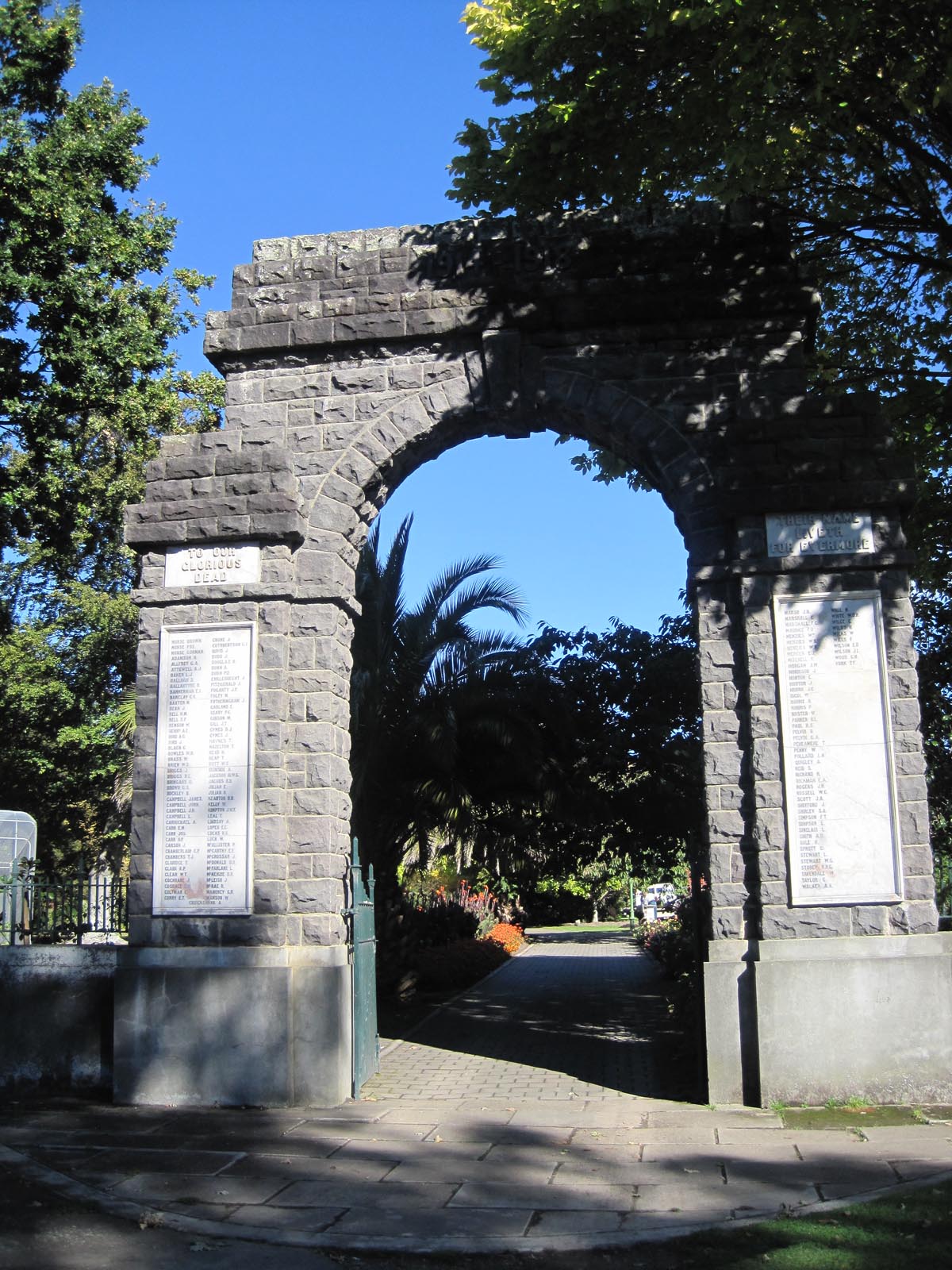
Waimate’s 1922 Anzac Day memorial service was observed with due regard to the sacredness of the occasion. “Dr. Hayes in a brief address, recalled the heroic deeds performed seven years ago that day by the Australians and New Zealanders on Gallipoli and at Cape Holies in particular, and also the work of the Anzacs in France and in Flanders. When they thought of these boys, he said, they should also remember the nurses and especially the nurses of Waimate who had lost their lives with the sinking of the “Marquette.” He spoke of the task completed by those who had sacrificed their lives; and concluded by again requesting his hearers never to forget them.” The Waimate War Memorial was unveiled following the Anzac Day service on 25 April 1923, the parade reforming to march to the park. Lieutenant-Colonel Newman Wilson, D.S.O., M.C., a Waimate man who served with distinction in the war, was invited to unveil the memorial. ‘Lieutenant-Colonel Wilson said that it was a matter for congratulation to the district and relations of those who are no longer with us that the splendid memorial had been erected. It was an outward expression of the high regard and esteem in which they held those who at the call of duty and danger did their job. “We who are left behind,” he said, “feel that there is little we can do compared to those who gave their all. We must keep Anzac Day as a holy day and not as a holiday, not only must we tell them the brave story but also must we tell them of the awful cost — through the great sorrow we must learn wisdom.” In conclusion Colonel Wilson said he would repeat the last lines of Kipling’s Recessional Hymn:
Lord God of Hosts, be with us yet,
Lest we forget, lest we forget.
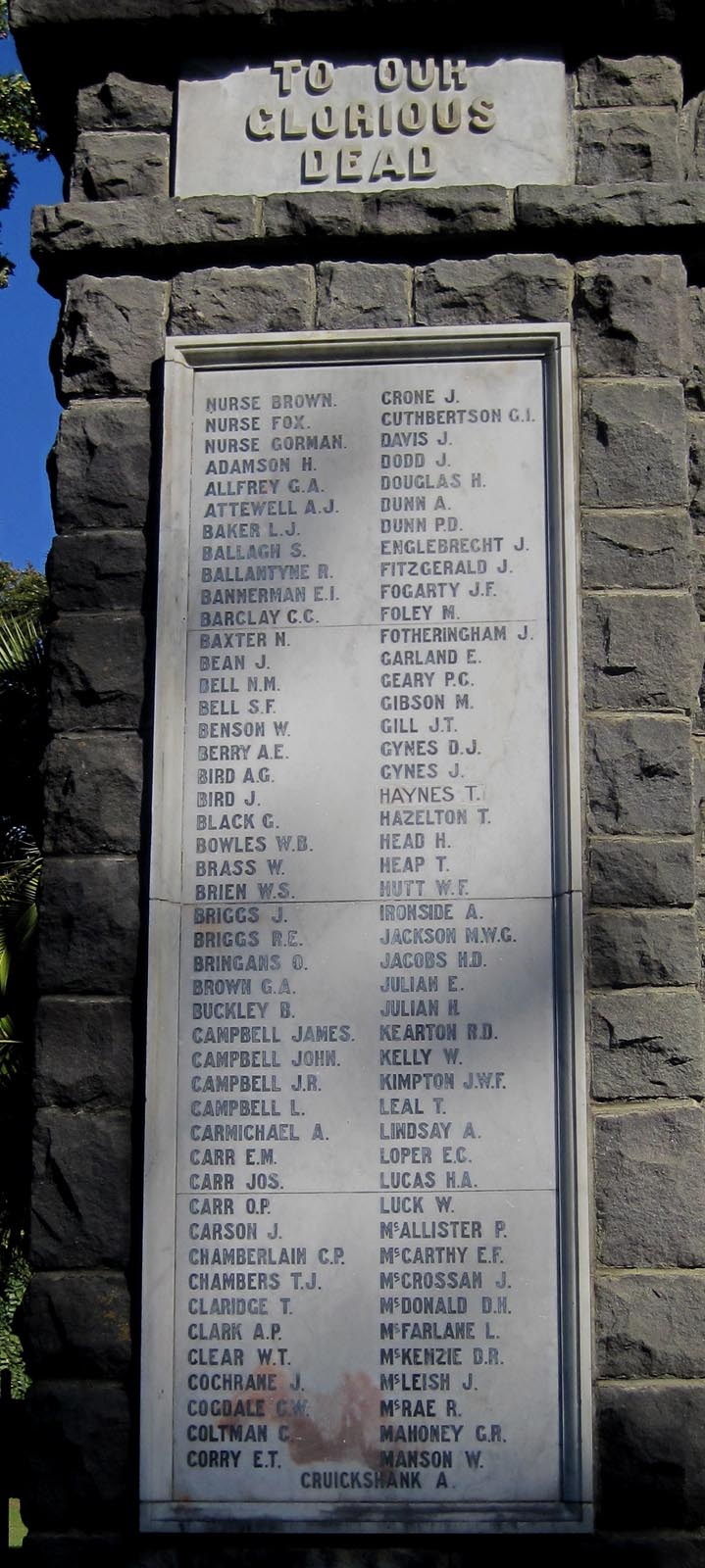
“I unveil this memorial to the glory of God and in honourable memory to those who gave their all for us and freedom.”’ A prayer of dedication, the firing of three volleys and the sounding of the “Last Post” followed, after which many beautiful wreaths were placed at the foot of the arch by returned men and relations of the fallen. The memorial which takes the form of a beautiful arch at Victoria Park records on marble tablets the names of those from the district who died in the Great War. Above the tablets is the inscription: “The glorious dead: the names liveth forever more.” Included among the names is Nurse Gorman.
At the November 1924 meeting of the Waimate Hospital Committee, on the suggestion of the Medical Superintendent it was decided to name the new ward after the late Dr. Cruickshank (who had died in the influenza epidemic), ,and also to name one ward in remembrance of Nurse Clark, who was trained at the hospital, and was drowned on the Marquette and to place a tablet in the latter ward bearing the names of all nurses who had lost their lives during the war. At the December meeting, it was decided to place a plate containing the names of Nurses Fox, Clarke and Gorman, who lost lives in the sinking of the “Marquette”, in the new ward, and to name the ward after the ill-fated vessel.
At the March 1925 meeting of the Waimate Hospital Committee, a letter was received from Mrs K. Gorman, stating that she would be pleased to forward an enlarged photograph of her daughter (the late Sister Gorman, who was drowned on the Marquette) to hang in the Marquette ward. The plaque reads – In commemoration of Nurses I. Clark, M. Gorman, C. Fox, who lost their lives in the service o the Empire on Board H.M.H.S. Marquette torpedoed in the Mediterranean. October, 1915. Since the closing of the hospital in 1996the plaque has been held by the Waimate Museum and is now on permanent display. Staff Nurse Mary Gorman’s Certificate of WW1 Service is also held by the Waimate Museum. On 23 October 2015 a small plaque was unveiled at the hospital monument near the Waimate District Council. The plaque commemorates the nurses and nursing orderlies who lost their lives in the Marquette disaster 100 years earlier. Of 36 nurses aboard, 10 died, many of the nurses came from Southland, particularly from Waimate and the surrounding areas. The plaque was purchased by nurses from Lister Home in Waimate, as a result of a fundraiser where they made First World War nurse veils to sell. Funding was also supplied by the Waimate District Council Heritage Fund and Rotary. The plaque was placed on the larger Hospital memorial because the Marquette was also memorialised there through the Marquette Ward. It was unveiled by Eileen Black, a former nurse of that ward.
In early 1925, funds were sought for an extension to the Elizabeth Garrett Anderson Hospital in London, to celebrate its 35th birthday. It was proposed to dedicate the new Nurses’ Home as a memorial to members of the Overseas Nursing Service who died in the Great War – 30 members of the Canadian Nursing Services, 24 members of the Australian Nursing Service, 15 members of the New Zealand Service, 4 members of the South African Service, 3 members of the Colonial Nursing Association, and 1 member attached to the Indian Military Nursing Service. Permission was given by the Dominion’s Governments. This hospital was the only hospital in England run for and staffed entirely by women. Elizabeth Garrett Anderson who was the first woman to practise as a doctor in Britain, died in December 1917. The foundation stone having been laid on 4 November 1937, this memorial in honour of those overseas nurses who died during the Great War while serving with the forces of the Empire was dedicated and opened on 27 October 1938. A memorial panel which bears twenty names including Mary Gorman, is set into the wall of the entrance hall.
Mary Gorman is also remembered on the Five Sisters Window in York Minster, York, England. In June 1925, the Duchess of York unveiled the famous mediaeval “Five Sisters” window in York Minster, restored as a national memorial to 1465 women of the Empire – War Heroines - who died during the war. There were many subscriptions from Australia and New Zealand. Before doing so she said: “As an act of most high praise and glad thanksgiving to Almighty God for the lives and devotion of the 1465 women of the Empire who died for their country in the war, now, in the name of their sisters in all parts of the world, I unveil and restore to its ancient use the Five Sisters Window.” Almost immediately the curtain shrouding the window fell soundlessly and gracefully away. After the singing of the hymn “For all the Saints who from their labours rest,” the Archbishop dedicated the oak screen which had been erected with the surplus of the funds raised for the restoration of the window, and has been placed in the St. Nicholas Chapel to bear the names of the 1465 women whose sacrifice in the war the restoration commemorates. After the blessing by the Archbishop, the “Last Post” and the “Reveille” were sounded. The Five Sisters window is a magnificent depiction in stained glass of needlework done by five sisters. During the war the precious glass of York was removed and stored for protection. It was later discovered that this special window was in urgent need of repair. It was one lady’s inspiration that led to the repairing and replacing of the window to become a single memorial to all the women of the Empire who gave their lives during the war. Women from all parts of the Empire funded the work, and in the space of nine weeks the £3000 asked for had been received. The names of more than 1400 women of Britain and the Dominions are painted on the screen, one of the panels dedicated to the New Zealand women. All along the top runs the inscription: ‘This screen records the names of women of the Empire who gave their lives in the war, 1914-1918, to whose memory the Five Sisters Window was restored by women.’ This war memorial is unique among war memorials.
New Zealand’s first hospital chapel (and only purpose-built hospital chapel) was erected at Christchurch Hospital in 1927 as a memorial to those Nursing Sisters who made the supreme sacrifice when the “Marquette” was torpedoed and those who died in the 1918 influenza epidemic, the first service being held on Christmas Day 1927. Stained glass windows and arched beams add to the beauty of the inter-denominational chapel. On 23 October 1965, the 50th anniversary of the Marquette tragedy, the Christchurch Press printed a specially written article which included personal accounts from survivors. “World War I had not long been entered on its second year when there occurred a disaster at sea involving a New Zealand hospital unit which caused a sensation at home. The occasion was the torpedoing of the troopship Marquette during its passage from Egypt to Greece. There was distressing loss of life among the nurses belonging to the hospital unit, and the whole Dominion was shocked when news of the sinking came through. Today is the fiftieth anniversary of the loss of the Marquette, which went to the bottom on October 23, 1915. The 8000-ton vessel slid under the waves in less than eight minutes after being struck. . . . . .” At a reunion of 32 survivors, of whom six were sisters in the Army Nursing Service, held in Christchurch that weekend, a special service in the nurses’ chapel at the Christchurch Hospital commemorated the fiftieth anniversary of the sinking of the troopship Marquette in the Gulf of Salonika on October 23, 1915. The chapel which was repaired after earthquake damage is now in the ownership of the Christchurch City Council and is protected by a Heritage Order.
Just after Anzac Day 1929, special church services were held in Waimate. Apt to be forgotten was the part that women played in the war, said the preacher at Knox Church. From the Waimate Hospital alone, there went forth three nurses who perished in the Marquette hospital ship. We must remember that women played their part and that they were drawn largely from the common people. Amongst the memorial floral tokens at the 1930 Waimate Anzac Day commemoration service, were several tributes from the Girl Guides to the memory of the Waimate nurses who lost their lives in the “Marquette”. A great tragedy of the war was recalled when a special service was held at the National War Memorial Tower at 3 o'clock on the afternoon 23 October 1932, for the purpose of commemorating the service and sacrifice of the New Zealand Army Nursing Service during the Great War. The date marked the 17th anniversary of the torpedoing of the transport Marquette in the Aegean Sea in which ten New Zealand nurses lost their lives and also the 14th anniversary of the second last battle in which the New Zealand Division participated, resulting in its capture of Beaudignies and the forcing of the passage of the Escaillon River. The service was attended by members of the New Zealand Army Nursing Service, the Returned Soldiers’ Association, and the National War Memorial Carillon Society. Special numbers were played on the National War Memorial Carillon. Of the 579 New Zealand nurses who served 15 gave their lives, including the ten lost in the Marquette disaster, Mary Gorman one of them.
Mary’s brothers Michael and John Gorman both took on farming, as did Leo, all probably working initially on the home farm. Trooper J. Gorman was a member of the Studholme Mounted Rifles in 1910. In September 1915, Mr and Mrs Gorman and M. Gorman made donations, joining “the ranks of the voluntary citizen army of givers”. John Gorman, farm manager, Waimate, and Leo Gorman, farm assistant, Arno Post Office, Waimate, were both drawn in the ninth ballot in July 1917. Their oldest brother Michael Gorman, farmer, Arno, who was listed on the 1916 Reserve Rolls, had been called up in June 1917 (eighth ballot). The second youngest son, Andrew Gorman, farmer, Arno, had been called up in November 1916 (first military service ballot). John Edmund Gorman did enlist for service in World War One but was not fit for active service. John Gorman, senior, died at his Waimate residence (“Highcliffs”) on 7 October 1922 and Mrs Catherine Gorman on 23 December 1933. In her Will, dated 1917, Kate Gorman named her daughters Bridget, Johanna, Margaret and Catherine, and her sons Michael, John, Andrew and James Leo. Two children predeceased John and Kate – Patrick Joseph (2nd son) died at Waikakahi in October 1913 (aged 28 years) and Nurse Mary Gorman (3rd daughter) was lost at sea in October 1915, a victim of the Marquette disaster. John and Kate were buried at Waimate with their son Patrick; their daughter Mary is remembered on their gravestone. Bridget Gorman died at Arno in August 1928 and was buried with her parents and siblings. The surviving family members, except John and Leo, moved from Arno to Christchurch in the 1950s and there they died – Johanna Annie in March 1967; Margaret in December 1965; Michael in November 1956; Andrew in October 1970; and Catherine (Kit) in February 1981. The first four were buried at Waimairi Cemetery, while Catherine was buried back at Waimate with her parents. John Edmund Gorman and James Leo Gorman (Leo) were the only two of the ten children of John and Kate to marry. John Edmond Gorman who married May Josephine Corrigan in 1943 and had three children, died at his Christchurch residence on 21 January 1971, and was buried at Waimate with May who had died in 1960. Leo who married Mary Frost in 1932 and had four sons (Pat, Michael, John and Andy), died at Christchurch in February 1976 and was buried at Temuka with Mary who had died in 1961. Descendants of Leo and Mary are still resident in South Canterbury.
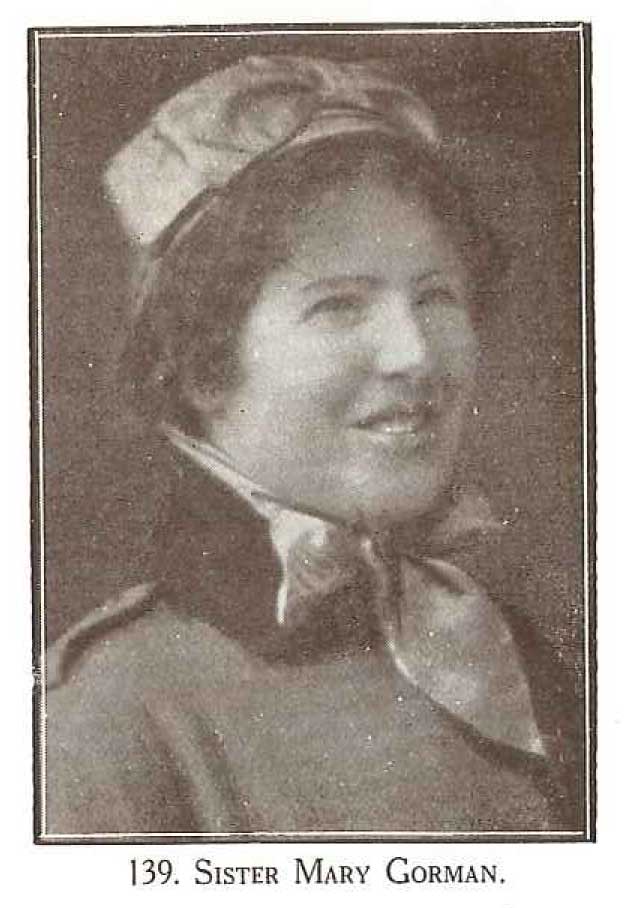
Different photographs of Mary Gorman were printed in the Free Lance on 5 November 1915 and the Otago Witness of 1 December 1915, and in other places.
Sources
Auckland War Memorial Museum Cenotaph Database [09 January 2014]; NZ Defence Force Personnel Records (Archives NZ Ref. AABK 18805 W5539 0046141) [12 January 2014]; CWGC [09 January 2014]; NZ BDM Indexes (Department of Internal Affairs) [17 July 2014; 11 August 2015]; New Zealand Military Nursing – World War One Roll of Honour (www.nzans.org) [09 January 2014]; Lyttelton Times, 20 December 1889, 11 November 1907, Timaru Herald, 30 March 1899, 15 November 1907, 4 March 1909, 19 July 1912, 21 May 1915, 4, 5, 6 & 9 November 1915, 27 October 1919, 27 April 1922, 13 November 1922, 8 November 1924, 5 December 1924, 6 March 1925, 14 October 1929, 26 April 1930, Press, 30 March 1899, 11 November 1907, 13 September 1915, 4 November 1915, 28 April 1923, 23 & 25 October 1965, Waimate Daily Advertiser, 3 March 1909, 27 August 1909, 30 August 1912, 27 September 1912, 25 October 1912, 7 & 16 April 1913, 20 June 1913, 20 May 1915, 8 September 1915, 3, 4, 6, 13 & 24 November 1915, 1 & 6 June 1917, 3 July 1917, 30 May 1918, 2 September 1921, 24 & 26 April 1922, 26 April 1923, 7 November 1924, 4 December 1924, 5 March 1925, 20 August 1925, 29 April 1929, Kai Tiaki: the journal of the nurses of New Zealand, 1 July 1912, 1 July 1915, 1 October 1915, 1 January 1916, 1 July 1925, Oamaru Mail, 29 August 1912, 3, 4 & 15 November 1915, Evening Post, 11 & 23 October 1912, 14 February 1913, 20, 21 & 22 May 1915, 3, 4 & 19 November 1915, 27 October 1919, 22 & 26 June 1925, 22 October 1932, 26 September 1938, Southland Times, 21 May 1915, Otago Daily Times, 25 May 1915, 27 June 1925, 4 & 7 August 1925, 16 September 1925, Ashburton Guardian, 3 November 1915, Poverty Bay Herald, 3 November 1915, Sun, 3, 4, 9 & 10 November 1915, 27 October 1919, Hastings Standard, 3 November 1915, Star, 3 November 1915, 30 December 1916, 26 June 1925, New Zealand Herald, 4 November 1915, 20 March 1925, 30 July 1925, Dominion, 4 & 5 November 1915, New Zealand Tablet, 4 November 1915, 23 December 1915, Free Lance, 5 November 1915, Otago Witness, 1 December 1915, Evening Star, 22 October 1919, Greymouth Evening Star, 28 October 1919, 23 May 1925, Manawatu Times, 12 November 1921, Manawatu Standard, 23 May 1925, Auckland Star, 26 June 1925, 26 October 1932, 12 November 1938, NZ Times, 4 August 1925, 5 September 1925 (Papers Past) [10 January 2014; 17 July 2014; 5 July 2015; 22, 23 & 25 August 2015; 05 November 2015; 15 January 2016; 26 & 30 June 2016; 20 August 2016; 16 April 2017; 03 August 2017; 16 February 2018; 18 September 2019; 02 May 2020; 21 June 2022; 17 July 2022; 03 February 2023; 14 July 2023; 17 January 2024; 27 May 2026; 03, 07 & 09 June 2026]; www.roosweb.ancestry.com/~nzlscant/marquette [9 January 2014]; Nurses Memorial in Christchurch Cathedral (rootsweb.ancestry.com) [10 January 2014]; NZ Electoral Rolls (ancestry.com.au) [17 July 2014; 26 May 2026; 04 June 2026]; Tragedy on the Marquette (www.nursingreview.co.nz/issue/april-2015) [25 August 2015]; NZ Birth printout (dia.govt.nz) [04 June 2026]; Credit - South Canterbury Herald, 14 October 2015; The Courier, Timaru, 15 October 2015; Otago Daily Times, 26 October 2015
External Links
Related Documents
Researched and Written by
Teresa Scott, SC Gennealogy Society
Currently Assigned to
TS
 Licensed under a Creative Commons Attribution-NonCommercial 4.0 International License unless otherwise stated.
Tell us more
Do you have information that could be added to this story? Or related images that you are happy to share? Submit them here!